
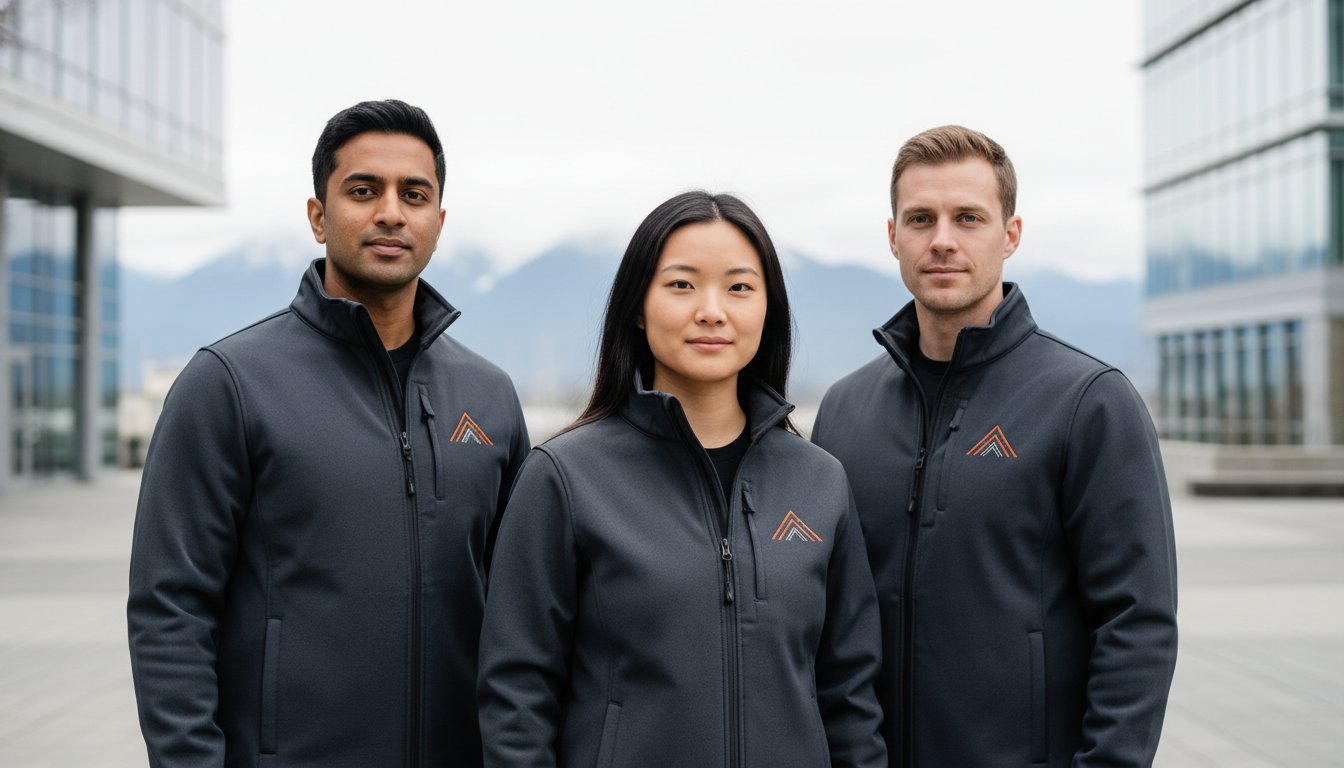
A single jacket that replaces both a heavy winter parka and a flimsy windbreaker sounds like a marketing myth. Yet, for Canadian teams, the softshell jacket has become the essential standard for professional, multi-season performance. You likely agree that finding a uniform that works as well in a boardroom as it does on a damp job site in Surrey is a constant challenge. It's difficult to justify a branding budget if you're worried about technical jargon or whether embroidery will ruin a waterproof membrane.
This guide helps you discover why this specific layer is the ultimate choice for your organization and how to choose the right technical specifications for your team. You'll learn what 8000 mm waterproof ratings actually mean for BC weather and how to navigate Canadian bilingual labelling requirements. We also preview the latest hybrid shell trends for 2026 to ensure your investment provides long-term value and keeps your staff protected in every environment.
Key Takeaways
- Analyze the three-layer technical construction of a softshell jacket to evaluate its versatility for Canadian weather.
- Define the functional differences between water-resistant and waterproof ratings to match apparel performance with local environmental needs.
- Assess the trade-offs between hardshells, fleeces, and softshells to optimize organizational budget and garment longevity.
- Identify embroidery best practices for technical fabrics to ensure high-quality branding without compromising the waterproof membrane.
- Implement companion sizing and tiered weights to achieve a consistent, professional aesthetic for your entire team.
Understanding the Softshell Jacket: The Hybrid Hero of Canadian Apparel
Traditionally, Canadian workwear relied on heavy, insulated parkas that restricted movement and caused overheating during physical tasks. Today, organizations prioritize versatility. The modern softshell jacket represents a technical evolution; it serves as the functional bridge between a breathable mid-layer fleece and a rigid, waterproof hardshell. This garment is engineered to provide essential weather protection without the restrictive bulk or "crinkle" of traditional outdoor coats.
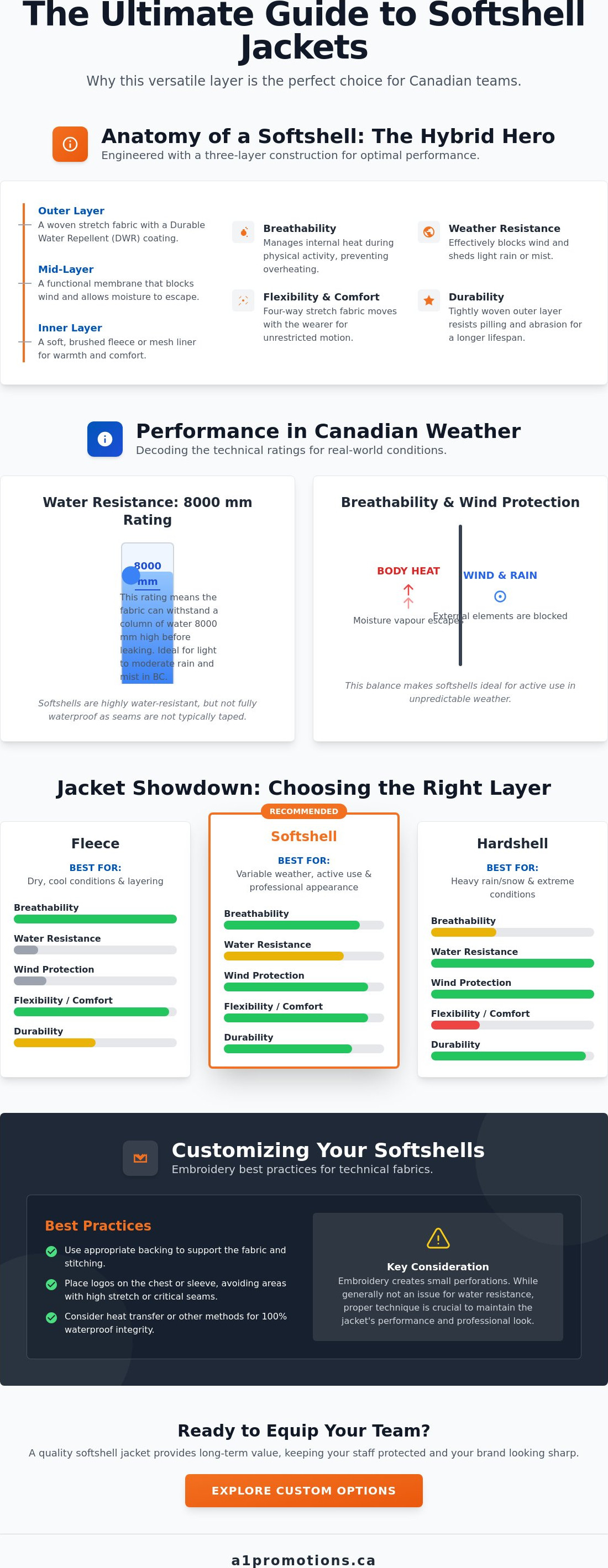
Most high-performance models utilize a specific three-layer laminate construction to achieve this balance. The outer layer consists of a woven polyester or nylon face fabric with integrated mechanical stretch. Beneath this sits a functional membrane that blocks wind while allowing moisture vapour to escape from the body. The final interior layer is typically a brushed fleece or mesh liner; this provides light insulation and comfort against the skin. This configuration creates a garment that excels during high-output activities where temperature regulation is critical. It bridges the gap between apparel categories by offering the stretch of a knit and the protection of a technical shell.
The Core Concept: Flexibility Meets Protection
A softshell jacket is a weather-resistant, breathable garment designed specifically for movement and aerobic activity. Unlike hardshells that can feel stiff and resist motion, these jackets utilize four-way stretch fabrics that move with the wearer. This "soft" characteristic makes the garment significantly quieter during physical tasks, which is a major advantage for security teams or event staff. It integrates perfectly into a modern layering system, acting as a standalone outer layer in moderate conditions or a protective mid-layer in extreme cold.
Why Softshells Dominate the Canadian Market
Canada's shoulder seasons are notoriously unpredictable. A morning that starts at -2°C in Surrey can easily reach 12°C by noon. Softshells handle these fluctuations better than knit sweaters because they manage internal heat more effectively while blocking wind chill. From a branding perspective, the smooth face fabric provides a professional, streamlined silhouette that aligns with corporate identity standards. These garments are also notably more durable than standard fleece. The tightly woven outer layer resists pilling and abrasion; this ensures the apparel maintains its professional appearance over multiple seasons of use. Organizations realize better value when uniforms don't require replacement after only a few months of wear.
Performance Features: How Softshell Technology Handles BC Weather
Weather conditions in the Lower Mainland rarely demand a full mountaineering hardshell for daily operations. Most organizational tasks in Surrey involve light mist, wind, and frequent transitions between vehicles and job sites. A softshell jacket provides the specific technical balance needed for this environment. While a hardshell is built for a deluge, it often lacks the air permeability required for active staff. Choosing the correct shell type depends on understanding the functional difference between being "waterproof" and "water-resistant."
For a detailed breakdown of these categories, reviewing the technical differences in Soft Shell vs. Hard Shell construction is useful. In the promotional apparel industry, a common standard for a quality softshell jacket is an 8000 mm waterproof rating. This rating indicates the fabric can resist significant moisture before leakage occurs. However, because the seams are typically not taped, these garments are classified as water-resistant rather than fully waterproof. This distinction allows the jacket to remain flexible and significantly more breathable than a rigid raincoat.
Water Resistance and the DWR Coating
The primary defence against BC rain is the Durable Water Repellent (DWR) finish. This chemical treatment is applied to the outer face fabric, causing water to bead up and roll off the surface. This prevents the fabric from "wetting out," a state where saturated fibres block the membrane and stop breathability. DWR is not a permanent treatment. To maintain performance, garments should be cleaned regularly; standard dirt and oils can mask the coating. Occasional tumble drying on low heat often reactivates the DWR polymers, ensuring the jacket continues to shed moisture effectively over its lifespan.
Breathability and Wind Protection
Breathability is the most critical feature for staff moving between climate-controlled offices and outdoor environments. A standard 800 gsm breathability rating allows internal moisture vapour to escape, preventing the "sauna effect" common with cheap plastic rainwear. There is always a trade-off; jackets with higher wind-blocking capabilities often have slightly lower breathability. For Surrey teams, a mid-weight shell with a wind-resistant membrane offers the best middle ground. The interior fleece lining plays a dual role here. It wicks sweat away from the body while trapping a thin layer of warm air to maintain core temperature. Selecting the right embroidered jackets for your staff ensures they stay dry without the bulk of a traditional parka.
Softshell vs. Hardshell vs. Fleece: Which is Best for Your Organization?
Selecting the right outerwear for a team involves balancing climate protection with professional aesthetics. While hardshells offer total water blockage and fleeces provide lightweight insulation, the softshell jacket occupies the functional centre. It provides enough weather resistance for standard Canadian workdays without the technical overkill of a mountaineering shell. Choosing between these three categories depends on the specific environment where your staff operates and the level of physical activity required.
From a branding perspective, the distinction is clear. Softshells feature a tightly woven face fabric that supports high-stitch-count embroidery without the pilling associated with fleece or the puckering often seen on thin hardshells. This fabric stability ensures corporate logos remain crisp and legible over the life of the garment. Additionally, softshells eliminate the "noise factor." Hardshells produce a noticeable crinkle with every movement, which can be distracting in professional or quiet environments. The silent, matte finish of a softshell presents a more refined image for client-facing roles.
When to Choose a Softshell Over a Fleece
A fleece is an excellent choice for indoor layering or cold, dry days where wind is not a factor. However, it lacks the structural integrity required for a professional outer layer. The shift toward custom clothing in Canada reflects a preference for softshells in roles that move between the office and the field. The windproof membrane in a softshell jacket provides a significant warmth advantage over the porous knit of a fleece. This makes it a more versatile single-piece solution for staff who require a garment that handles fluctuating temperatures.
Softshell vs. Rain Shell: The Waterproof Debate
Hardshell rain jackets are essential for staff standing in heavy downpours for extended periods. They use non-porous membranes and taped seams to ensure zero moisture penetration. The trade-off is comfort and flexibility. For the majority of daily Canadian organizational activities, such as event setup or vehicle loading, the mobility and silence of a softshell are preferable. It handles the intermittent rain typical of the Lower Mainland while allowing the wearer to remain comfortable during physical tasks. If your team is not stationary in a deluge, the breathability of a softshell prevents the internal moisture buildup common with hardshells.
Customizing Your Softshells: Embroidery and Branding Best Practices
Embroidery remains the industry standard for branding a softshell jacket because it matches the garment's lifespan and professional aesthetic. Unlike screen printing, which can occasionally struggle with the stretch and specialized coatings of technical fabrics, embroidery provides a permanent, high-relief finish. A frequent concern for Canadian organizations is whether the embroidery needle punctures the waterproof membrane and causes leaks. While the needle does create small holes, the high stitch density of a professional logo combined with the synthetic thread effectively plugs these gaps. For standard corporate use and light rain in the Lower Mainland, this does not compromise the jacket's functional performance.
Thread selection is critical for maintaining a professional appearance over time. We utilize high-tensile polyester threads that resist bleaching and UV fading. This is particularly important for staff working outdoors where sun exposure can dull cheaper rayon threads. The durability of the branding must match the durability of the shell fabric to ensure the uniform doesn't look aged before the garment actually wears out. Strategic logo placement also plays a role in visibility. While the left chest is traditional, adding branding to the right sleeve or the back-of-neck area increases brand impressions during different activities, such as driving or event setup.
The Power of Professional Embroidery
A precisely digitized logo elevates technical outerwear into a cohesive corporate tool. Organizations looking for regional expertise should review our guide on embroidery near me to understand how local production affects turnaround times and quality control. If your brand requires a more rugged or modern look, custom patches serve as an excellent alternative. Patches can be produced with fine detail that direct embroidery sometimes misses on textured surfaces, and they offer a distinct, three-dimensional finish that stands out on matte shell fabrics.
Design Considerations for Outerwear
Legibility is the primary goal for any branded apparel. Softshell fabrics have a slight mechanical stretch that can distort very small, intricate text or thin lines. We recommend using bold sans-serif fonts and ensuring high colour contrast between the jacket and the thread. For example, a charcoal jacket paired with a silver or white logo provides maximum impact. To ensure a fully integrated team appearance, many organizations coordinate their outerwear with headwear from our custom hats guide. This creates a unified look from head to toe that reinforces brand authority.
Ready to upgrade your team's professional image? Browse our range of embroidered jackets at A1 Promotions Ltd. to find the perfect match for your organization's needs.
Selecting the Right Softshell for Your Surrey Team or Event
Selecting a softshell jacket for a professional team requires a match between the garment's technical tier and the user's daily environment. Manufacturers typically offer three weight classes. Lightweight shells work best for sales representatives transitioning between vehicles and offices. Mid-weight options serve as the standard corporate choice for general use. Heavy-duty, fleece-lined versions are required for Surrey construction sites or outdoor school events. Choosing wholesale-sourced models over high-end retail ensures consistent availability and a more manageable budget for large-scale projects. It's often more practical to invest in a durable, mid-range shell that can be replaced across an entire department as new staff join.
Coordination across an entire organization involves selecting different tiers of the same product line. A security team might require a heavy-duty shell with a hood; the administrative staff uses a lightweight version of the same fabric. This modular approach maintains a cohesive brand identity while respecting the different physical demands of each role. Always verify that the chosen model includes a bilingual label as per the Textile Labelling and Advertising Regulations. These labels must genericize the fibre content and include the dealer's CA identification number or full address to remain compliant in the Canadian market.
Matching the Jacket to the Job
The hood debate is a common organizational hurdle. Hoods offer essential protection for field staff but can look informal in executive settings. To maintain a professional look, prioritize companion styles. Selecting men's and women's versions of the same model ensures a uniform appearance across the staff. Evaluate these functional features before finalizing an order:
- Zippered security pockets for mobile equipment and tools
- Adjustable cuffs to manage heat and seal out BC rain
- Bilingual labelling (English and French) for regulatory compliance
- Dropped back hems for better coverage during physical tasks
The A1 Promotions Ltd. Difference in Surrey
A local Surrey partner simplifies the procurement process for your softshell jacket order. We provide direct colour matching and fit samples to ensure the final product meets your expectations. Local production means faster turnaround times for Lower Mainland organizations compared to overseas suppliers. We manage the technical details, including compliance with Canadian labelling standards and the specific 12% combined PST and GST calculations for BC businesses. This local expertise prevents common errors in sizing and branding that can delay a project.
Ready to outfit your organization with professional, durable outerwear? Contact A1 Promotions Ltd. for a custom softshell quote.
Equipping Your Team for Every Canadian Season
Selecting the right outerwear ensures your staff remains comfortable and professional regardless of fluctuating weather. By prioritizing a high-performance softshell jacket, you secure a garment that balances essential water resistance with the breathability required for high-output tasks. Focus on companion styles to maintain uniformity across your organization and utilize professional embroidery to protect your brand's visual identity over the long term. The right technical layer justifies your budget by lasting through multiple seasons of rigorous use.
A1 Promotions Ltd. has been family-owned and operated in Surrey since 2004. We provide in-house embroidery and screen printing; this allows us to maintain strict quality control on every technical garment we produce. Our team serves schools and businesses across Canada, providing the expertise needed to navigate technical specifications and labelling regulations. We're ready to help you finalize your apparel strategy with reliable, local service.
Get a custom quote for branded softshell jackets today. We look forward to building a durable apparel program for your organization.
Frequently Asked Questions
Is a softshell jacket waterproof enough for BC rain?
Most softshells are water-resistant rather than fully waterproof because they lack taped seams. A quality softshell jacket with an 8000 mm rating handles the mist and light rain common in Surrey and the Lower Mainland effectively. It is not designed for standing in a heavy downpour for several hours; a hardshell rain jacket is required for those specific conditions.
Can you embroider a softshell jacket without ruining it?
Professional embroidery is the preferred branding method and does not compromise the jacket for standard organizational use. While the needle punctures the fabric, the high density of the thread effectively seals the holes. This prevents significant moisture penetration during normal wear. It remains the gold standard for creating a durable, high-quality corporate uniform that outlasts printed alternatives.
How should I wash and care for my branded softshell?
Machine wash the garment on a cold, gentle cycle using a mild detergent. You must avoid fabric softeners; these chemicals clog the breathable pores of the membrane and degrade the water-repellent coating. Tumble dry on low heat to help reactivate the Durable Water Repellent (DWR) finish on the outer fabric. This simple maintenance routine ensures the branding remains crisp and the technical features continue to perform.
What is the difference between a softshell and a windbreaker?
A softshell is a multi-layer technical garment that provides insulation, water resistance, and stretch. A windbreaker is typically a single layer of thin nylon designed solely to block wind. Softshells offer significantly more warmth and a more professional, structured silhouette for staff. They are much more durable than windbreakers and better suited for multi-season use in Canada.
Are softshell jackets warm enough for Canadian winters?
Softshells are ideal for active use in winter or as a layer in temperatures down to approximately -5°C. For stationary work in deep Canadian cold, they should be used as part of a layering system beneath a heavier parka. Their primary strength is windproofing; this maintains core warmth by preventing cold air from stripping away body heat during outdoor tasks.
Do softshell jackets come in different weights?
Manufacturers produce these jackets in lightweight, mid-weight, and heavy-duty tiers to suit different roles. Lightweight versions are highly breathable and best for sales reps or indoor-outdoor transitions. Heavy-duty versions feature thicker fleece linings and tougher face fabrics; these are the better choice for construction sites or security personnel working in exposed environments.
How do I choose the right size for a large team order?
Review the specific manufacturer size charts for each model before finalizing your order. Because technical outerwear often has a more athletic fit, many organizations request a physical size run of samples to let staff try them on. Ensure you select companion styles for men and women to provide a consistent, professional fit for the entire team.


