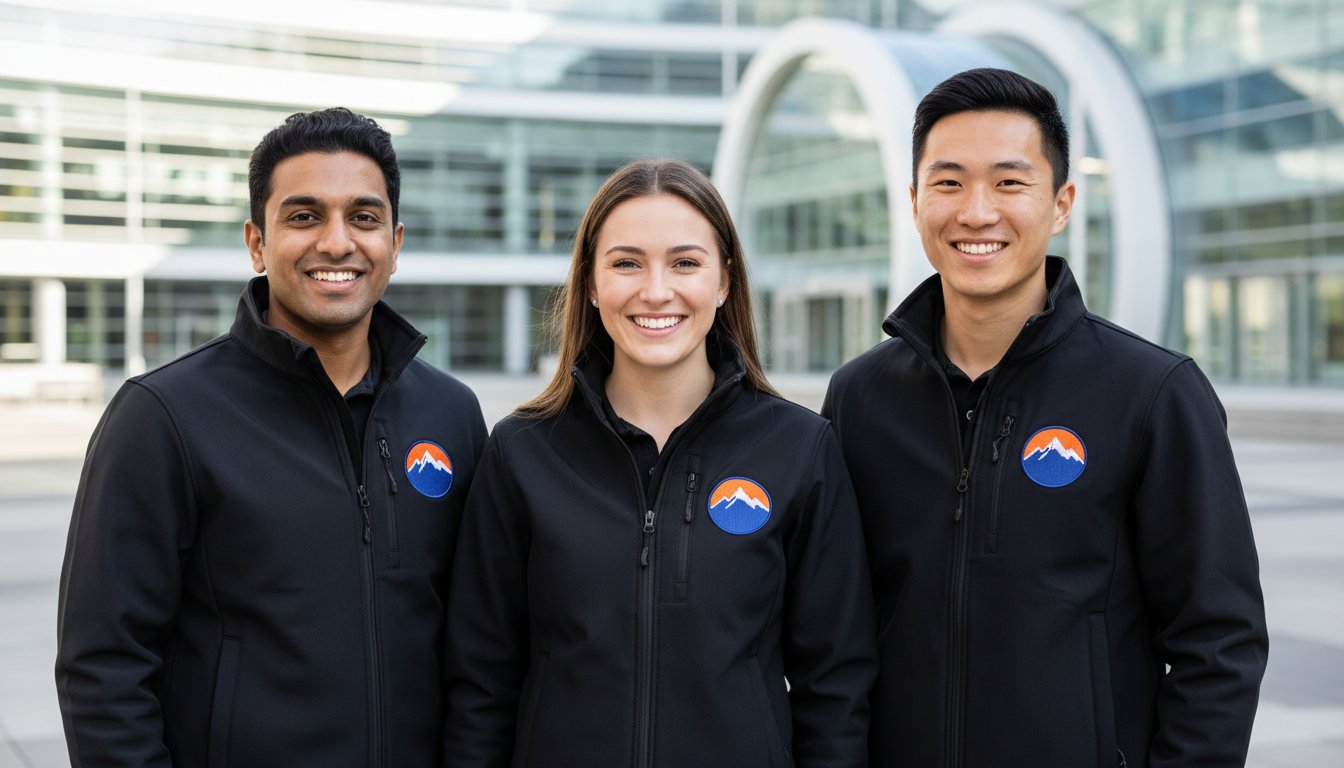
A single 7.5-centimetre patch can increase the perceived value of a standard work jacket by 42 percent, according to 2023 industry valuation metrics. It's a significant impact for a small investment. However, choosing the wrong patches often leads to technical frustration. Logos can lose their integrity after just five washes. You want a professional look for your organization but might feel stuck between woven and embroidered options. It's common to worry about logo legibility at a small scale or adhesive failure in Canadian winter conditions. You need a solution that balances cost with long-term durability.
This guide simplifies the selection process. You'll learn how to secure a durable, cost-effective alternative to direct embroidery, saving your organization significant CAD$ on large-scale orders. We cover how to design for small-scale clarity and which application methods survive tough laundry cycles. We'll examine technical specifications, compare branding styles, and provide a clear path to professional-grade garments. From choosing the right backing to understanding thread counts, this breakdown ensures your brand stays visible and intact across Canada.
Key Takeaways
- Analyze the technical and tactile differences between embroidered, woven, and PVC styles to match the right material to your garment type.
- Evaluate iron-on versus sew-on application methods to ensure long-term durability based on specific garment use and wash frequency.
- Optimize logo designs for small canvases by using high-contrast colour palettes and simplified graphics for maximum visibility.
- Discover why custom patches offer superior flexibility and cost-efficiency for modern branding compared to direct embroidery.
- Partner with a local Surrey-based specialist to access professional branding solutions tailored to the Canadian market since 2004.
What are Patches and Why are They Essential for Modern Branding?
A custom patch is a standalone piece of branded art created by weaving or embroidering a design onto a fabric backing. Unlike direct embroidery, which stitches the logo directly into the garment, patches are manufactured as independent units. This separation allows for 100% thread coverage and a level of detail that direct-to-garment methods cannot achieve. The Embroidered patch serves as a versatile branding tool that offers a higher tactile quality than standard flat decoration.
Choosing patches over direct embroidery provides several functional advantages for Canadian businesses:
- Flexibility: Patches can be applied to difficult-to-stitch areas like hat seams or heavy jacket sleeves.
- Cost-Efficiency: Ordering patches in bulk reduces the per-unit cost, even if you apply them to different garments later.
- Texture: The raised surface creates a premium, professional look that stands out on corporate apparel.
We see a significant resurgence of this branding style across corporate, security, and educational sectors. In Canada, patches are the primary choice for heavy-duty workwear. Industrial environments require branding that can withstand extreme cold and high-friction manual labour. A patch maintains its integrity on a heavy canvas work jacket far longer than a direct stitch that might pull or tear the base fabric.
The History and Evolution of Organizational Patches
The use of these items started with military rank identification. It has since evolved into a core component of modern corporate identity. By 2026, manufacturing technology has advanced to allow for 0.1mm detail accuracy in thread placement. This precision ensures that complex corporate logos remain legible even at small sizes. In Canadian schools, there's a growing trend toward "spirit patches." These are collectible items used to reward student achievements in athletics and academics, replacing traditional ribbons with something more durable and permanent.
Top Benefits of Choosing Patches Over Direct Printing
Durability is the most critical factor. Screen printing often cracks or peels after 25 wash cycles in industrial machines. Patches are built to outlast the garment itself. They don't fade under UV exposure or degrade in high-heat drying cycles. This makes them ideal for outdoor Canadian work environments.
Versatility is another major benefit. You can use the same patch design for hats, bags, and winter parkas. This consistency simplifies the procurement process for organizations with diverse uniform needs. Finally, patches add dimension. The 3D effect gives basic promotional items a high-end feel. It transforms a standard polyester bag into a premium branded asset. This tactile depth is a key differentiator for brands looking to project a sense of quality and permanence.
Comparing Patch Types: Embroidered, Woven, and PVC
Choosing the correct material for your patches depends on the weight of the garment and the complexity of the artwork. A heavy canvas jacket supports high-density embroidery; a lightweight performance polo requires a thinner woven alternative to prevent fabric sagging. Thread count determines design clarity. Standard embroidery uses thicker 40-weight thread. Woven styles utilize finer 80-weight thread to capture small text under 4mm in height. This technical difference ensures that intricate logos remain legible at smaller sizes.
Border selection impacts the final application and durability. Merrowed edges provide a 1/8-inch wrapped border. They are durable, classic, and best for standard shapes like circles or shields. Heat-cut edges are laser-trimmed. They allow for sharp angles and intricate custom shapes that a merrow machine cannot reach. If you are looking for specific branding solutions, you can browse our product catalogue to see these styles in action.
Embroidered Patches: The Classic Standard
Embroidered options remain the industry benchmark for sports teams and security uniforms. They offer a distinct 3D texture that stands out from the garment. This style typically uses 100% thread coverage on a durable twill backing. It is built for heavy wear and repeated industrial laundering. Small text can become illegible if the font is too condensed; stick to bold, clean lines for the best visual results. These are the most common choice for traditional corporate identity.
Woven and PVC Patches: Modern Alternatives
Woven patches provide a flat, smooth surface. They excel at replicating complex gradients and fine details that embroidery cannot achieve. They are approximately 50% thinner than embroidered versions. This makes them ideal for headwear and athletic gear where bulk is a concern. PVC patches are made from soft polyvinyl chloride. They are 100% waterproof. They do not fade, crack, or fray. This makes them the top choice for outdoor gear used in Lower Mainland rain or harsh maritime environments.
Leather and Faux-Leather: High-End Aesthetics
Leather patches offer a rustic, premium feel for headwear and outerwear. These are often laser-engraved or debossed. This process creates a high-contrast look without using any thread. Real leather provides natural variation in colour and texture. Faux-leather offers consistency across large production runs and is often more cost-effective. Both styles are popular for beanies and high-end corporate apparel. Need to Know Pricing? Most leather options are quoted based on the square inch and the complexity of the engraving.
Iron-On vs. Sew-On: Application Methods for Longevity
Choosing the right attachment method for patches depends on the garment's intended environment and laundry requirements. Industrial uniforms subjected to weekly high-heat laundering need different specifications than promotional headwear. A 2023 industry report suggests that mechanical fastening remains the standard for items expected to last over 50 wash cycles. While adhesives offer speed, they often lack the structural integrity required for heavy-duty applications.
Safety remains a priority for Canadian industrial sectors. Workwear used in oil, gas, or electrical utilities must adhere to CSA Z96-22 standards for high-visibility and NFPA 2112 for flame resistance. Applying a standard polyester patch to an FR-rated garment creates a safety hazard. In these cases, patches must be sewn using Nomex thread and fire-resistant materials to ensure the garment's protective properties remain intact during a thermal event.
The Iron-On Process: Convenience vs. Durability
Heat seal backing is a thermoplastic adhesive that melts under specific temperature thresholds to fuse with the textile fibres of a garment. For a successful bond in a shop setting, follow these steps:
- Pre-heat the heat press to 160°C (320°F).
- Place the garment on the platen and press for 5 seconds to remove moisture and wrinkles.
- Position the patch and cover with a Teflon sheet or parchment paper.
- Apply firm pressure (approximately 40 to 60 PSI) for 15 to 20 seconds.
- Turn the garment inside out and press the reverse side for an additional 10 seconds to pull the adhesive into the fabric.
Peeling is the most frequent failure for iron-on patches. This usually happens when using a domestic iron, which lacks the consistent pressure and surface heat of a commercial press. If the adhesive does not reach its liquid state across the entire surface, the bond will fail during the first wash cycle.
Sew-On and Velcro: The Professional Choice
Sewing is the most reliable method for security, law enforcement, and transit uniforms. It ensures the patch stays attached even under physical strain. For organizations with rotating staff or changing ranks, Velcro (hook and loop) backings provide necessary flexibility. This allows a single jacket to serve multiple roles by simply swapping the identifiers.
Fabric weight is a critical factor when sewing. Attaching a heavy, high-stitch-count patch to a lightweight 130 GSM polyester shirt can cause the fabric to pucker or tear. Use a stabilizer on the inside of the garment to distribute the weight. This maintains the professional drape of the uniform and prevents long-term damage to the base material.
Designing Effective Patches for Teams and Businesses
Designing for a 3-inch or 4-inch canvas requires technical restraint. Complex logos with fine gradients or thin lines often fail during the production process. You should simplify your design by removing small details that don't translate well to thread. Focus on bold shapes and solid blocks of colour to ensure the brand remains recognizable at a glance.
Visibility depends on high-contrast palettes. Using dark navy on a white background or black text on a safety yellow base ensures legibility from 5 metres away. Typography also follows strict technical limits. For embroidered patches, keep font heights at a minimum of 5mm. If your branding requires smaller text, woven options support heights down to 3mm due to the thinner thread used in the weaving process.
- Logo Simplification: Remove drop shadows and 1pt lines.
- Contrast: Use complementary colours with high tonal value differences.
- Borders: Choose a merrowed edge for a classic look or a heat-cut edge for complex shapes.
Patches for Surrey Schools and Sports Teams
Surrey school districts and local athletic clubs often use "letterman" style chenille patches to recognize graduation or provincial championships. These designs use a vaulted wool pile to create texture and depth. For spirit wear, schools find that 3-inch circular designs are the most tradable items among students. Standardizing sizes across different age groups, such as a consistent 3.5-inch shield, ensures branding remains uniform from elementary through to secondary levels. This consistency helps reduce setup costs for bulk orders.
Corporate and Security Patch Standards
Security firms and construction companies require functional designs that prioritize safety and identification. Name tags must use sans-serif block fonts to ensure staff names are readable in low-light conditions. Incorporating 3M reflective threads into the border or text increases worker visibility on active job sites by 40% compared to standard polyester thread. For rugged environments, choose a twill backing with a high thread count to prevent fraying. This balance of professional aesthetics and industrial durability ensures the gear lasts through heavy daily use.
Ready to start your design? View our custom patch options at A1 Promotions
Custom Patch Solutions with A1 Promotions in Surrey
A1 Promotions Ltd. has operated as a family-run business in Surrey since 2004. We prioritize functional directness and technical precision in every project. Our comprehensive approach to branding covers everything from traditional embroidery to advanced laser engraving. We use professional-grade equipment to ensure your design vision is realized exactly as intended. For businesses and organizations across the Lower Mainland, our local production facility ensures fast turnaround times. We eliminate the linguistic clutter and logistical delays often found in the promotional industry. Whether you need durable patches for workwear or high-visibility branding for events, our team delivers predictable results.
Why Local Expertise Matters for Your Branding
Direct communication ensures your brand colours and specifications are accurate. We work closely with Surrey schools and community groups to provide personalized service that respects your timeline. Avoiding overseas providers reduces your exposure to quality risks and unpredictable shipping delays. By keeping production in Surrey, we maintain a steady and objective voice in our project management. This local focus allows us to act as a dependable partner for organizations that value straightforward transactions. We understand the specific needs of the Canadian market and use localized markers like CAD$ pricing to keep budgeting simple. Our team provides the necessary tools for business branding without unnecessary distraction.
Getting Started with Your Custom Order
High-quality production starts with proper artwork. We recommend providing vector files to ensure the best results on your custom patches. Our "Need to Know Pricing" model is built for transparency. It provides the essential data you need to make a decision without unnecessary marketing hype. This minimalist approach ensures that the most important information remains the focal point of our communication. We focus on material quality and performance characteristics to ensure your branding lasts.
- Submit high-resolution artwork for technical review.
- Specify material requirements such as Ottoman or Vertical Mesh textures.
- Review your "Need to Know Pricing" quote for transparent budgeting.
- Confirm your order for local Surrey production and fast turnaround.
Our process is designed for quick scanning and efficient decision-making. We don't believe in hidden fees or complex narratives. We simply provide the professional tools you need to represent your brand. Contact A1 Promotions today for a custom quote on your next project.
Strengthen Your Professional Identity
Selecting the right material and application method ensures your branding remains durable and professional. Whether you opt for the classic texture of embroidery or the crisp detail of PVC, these high-quality identifiers offer a versatile solution for team uniforms and corporate apparel. Industrial sewing or heat-press application provides the longevity required for active work environments. We've spent nearly two decades refining our production processes to ensure every order meets our high standards for durability.
A1 Promotions Ltd. has served Surrey and the Lower Mainland since 2004. We're a family-owned business committed to transparent pricing and consistent quality. Our team specializes in embroidery, screen printing, and laser engraving to help you achieve a polished look. We focus on providing the technical specifications and cost clarity your organization needs to make informed decisions without any unnecessary distraction.
Ready to start your next branding project? Request a custom quote for your organization’s patches today. We're here to help you get the job done right.
Frequently Asked Questions
What is the most durable type of patch for outdoor workwear?
PVC patches are the most durable choice for outdoor workwear because they're made from a rugged polyvinyl chloride material. These patches withstand extreme weather conditions, including temperatures as low as -30°C and as high as 50°C. Unlike fabric options, they don't fray or absorb moisture. This makes them ideal for Canadian industries like construction or landscaping where gear faces constant abrasion and mud.
Can I put an iron-on patch on any type of fabric?
You can't put an iron-on patch on every fabric type. Heat-sensitive materials like 100% nylon, silk, or delicate rayons will melt or scorch under the 150°C to 175°C heat required for application. These patches bond best with 100% cotton, denim, or polyester-cotton blends. For technical outerwear or waterproof shells, we recommend a sewn-on application to ensure the garment's integrity remains intact.
What is the difference between an embroidered patch and a woven patch?
The main difference between an embroidered patch and a woven patch is the thread thickness and detail capability. Embroidered versions use thicker rayon or polyester threads that sit on top of a twill backing, creating a textured 3D effect. Woven patches use much thinner threads and a tighter weave. This allows for 40% more detail in small text or complex logos that would otherwise look cluttered with embroidery.
How do I make sure my custom patch design is legible?
Ensure your custom patch design is legible by maintaining a minimum text height of 4mm for embroidered styles. Using high-contrast colour combinations, such as white text on a navy background, improves visibility from a distance. Avoid gradients or shadows in your artwork. Simplifying your logo to its core elements ensures the branding remains clear when scaled down to a standard 75mm or 100mm size.
Are custom patches more expensive than direct embroidery?
Custom patches are often more cost-effective than direct embroidery for high-volume orders or complex designs with high stitch counts. While a direct embroidery setup might cost C$15 to C$25 per unit for small runs, patches allow for bulk production that lowers the per-unit price. Since patches are produced separately, you also avoid the risk of damaging expensive garments during the embroidery process itself.
How long do custom patches typically last on a uniform?
Custom patches typically last between 50 and 100 industrial wash cycles depending on the attachment method. Sewn-on patches usually outlast the garment itself because the polyester threads are resistant to UV fading and bleach. Iron-on backings have a shorter lifespan of about 20 to 30 washes before the adhesive begins to weaken. For uniforms used in heavy-duty environments, a reinforced stitched border provides the best long-term durability.
Can patches be removed and reused on different garments?
Patches can be removed and reused if they're attached with a hook-and-loop backing or a simple running stitch. This is a common practice for 85% of security and emergency services personnel who swap insignia between seasonal jackets. Iron-on or heat-sealed patches are permanent and can't be moved without leaving adhesive residue or damaging the fabric fibres of the original garment.
What is the minimum order quantity for custom patches in Surrey?
The minimum order quantity for custom patches in Surrey typically starts at 25 units for standard embroidered styles. Some specialized options, like PVC or woven designs, may require a minimum of 50 units to cover the initial setup costs of the moulds or looms. Ordering in these quantities ensures you get the most value for your branding budget while maintaining professional quality across your entire organization's apparel.


