

The global market for school uniforms is projected to reach US$ 32.15 billion by late 2026. Despite this scale, many families still deal with fabrics that pill, fade, or irritate skin after just three months. You likely agree that apparel is only a functional asset if it remains durable and comfortable for the entire year. It's frustrating to invest in garments that children refuse to wear.
This article provides the technical data needed to balance school dress codes with modern fabric performance. You'll learn how to identify high-quality materials like moisture-wicking blends and recycled polyester (rPET) that stand up to daily activity. We also preview the latest trends in subtle branding and provide a roadmap for finding reliable customization partners in Surrey, BC; this ensures your school pride remains professional and cost-effective.
Key Takeaways
- Identify the shift from traditional formal wear toward performance-based apparel and flexible dress codes.
- Recognize why pill-resistant finishes and cotton-poly blends are the technical benchmarks for durable school uniforms.
- Evaluate embroidery versus screen printing to select the most professional branding method for your specific garment types.
- Learn the "Growth Room" sizing strategy to ensure apparel remains functional throughout the entire academic year.
- Discover the logistical advantages of local Surrey sourcing for faster turnarounds and direct quality oversight.
What are School Uniforms? Understanding Modern Standards
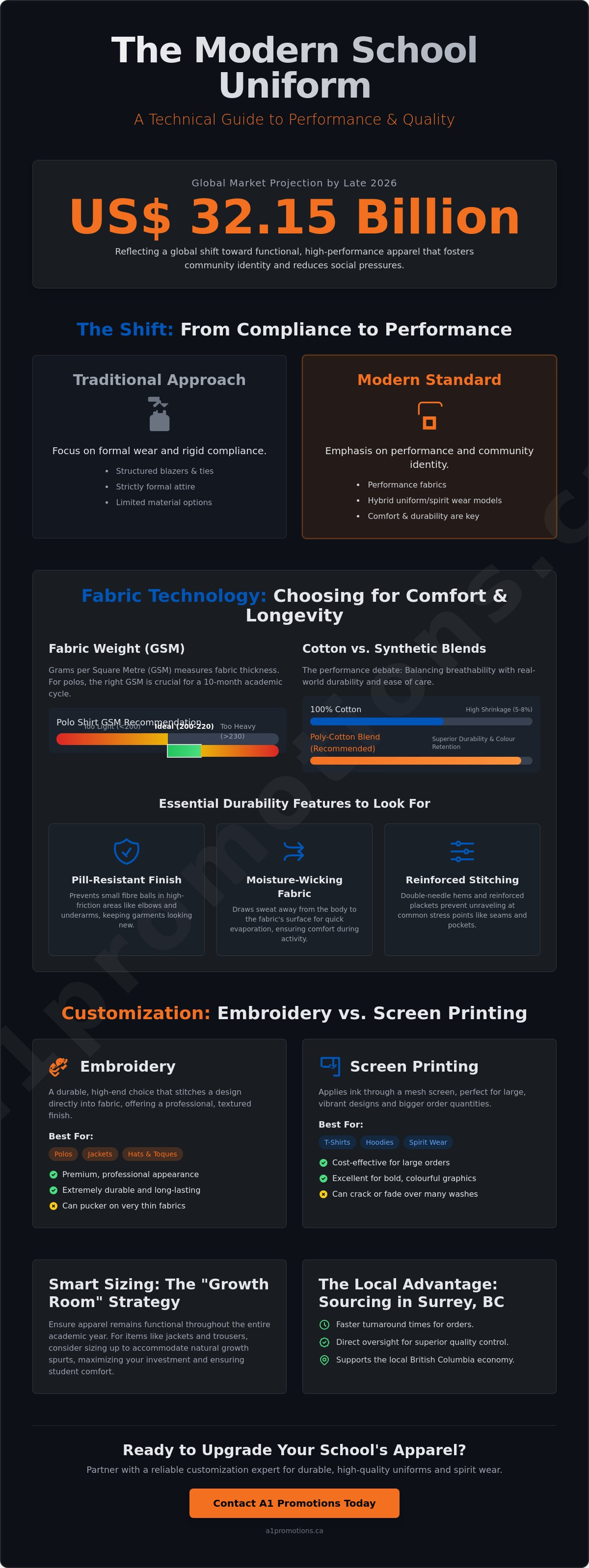
In 2026, the definition of school uniforms has transitioned from rigid compliance to a focus on performance and community identity. The global market is now valued at approximately US$ 32.15 billion. This growth reflects a shift toward functional apparel that supports student activity throughout the day. Schools utilize these standards to reduce social pressure and visible economic disparities. By removing the competition of fast-fashion trends, institutions create a level playing field where academic performance takes priority. The history of school uniforms reveals a move from strictly formal attire to the versatile systems used in Canadian schools today.
Legislative changes are also shaping these standards. For example, a new bill in Iowa requires all public and charter schools to enforce dress code policies starting July 1, 2026. Similarly, the UK will limit compulsory branded items to just three or four pieces by September 2026. These regulations aim to balance the benefits of a unified look with the practical need for parent affordability. Modern standards prioritize durability; fabrics must withstand frequent washing without pilling or losing colour. This technical focus ensures that garments remain professional for the entire academic year.
The Difference Between Uniforms and Spirit Wear
Formal uniforms typically consist of structured items like blazers, ties, and pleated skirts. These are common in traditional private schools. Spirit wear includes branded hoodies, t-shirts, and athletic gear designed for casual days or sports events. Hybrid models are now the standard across British Columbia. These programs combine a mandatory polo or button-down shirt with flexible spirit wear options for extracurricular activities. This modular approach allows students to transition between the classroom and the gym without compromising the school’s visual identity.
Standardized Dress Codes vs. Mandatory Uniforms
Mandatory uniforms require specific garments from an authorized vendor. In contrast, standardized dress codes often use "colour-blocking" rules. A school might mandate navy blue trousers and white shirts but allow parents to purchase them from any supplier. This shift toward no-logo basics supplemented by custom accessories helps manage costs. Families in the US spend an average of $150 per child annually on uniforms; whereas private school packages can reach $800. Standardized codes provide a middle ground that maintains discipline while offering families more sourcing flexibility and improved student comfort.
Fabric Technology: Choosing for Comfort and Longevity
Performance in school uniforms begins with technical specifications. A 2013 study on impacts of school uniforms highlights how consistent apparel quality affects student identity and safety perceptions. To achieve this consistency, fabric selection must prioritize durability and material weight. Grams per Square Metre (GSM) is the standard metric for measuring thickness. For a standard polo, a GSM of 200 to 220 ensures the garment maintains its structure through a 10-month academic cycle. Lower weights often lead to premature thinning and transparency after repeated laundering.
Modern apparel technology includes pill-resistant finishes. These treatments prevent the formation of small fibre balls in high-friction areas like elbows and knees. For active elementary students, moisture-wicking properties are essential. These fabrics move sweat away from the body to the outer surface for quick evaporation. This keeps students dry during transitions between the classroom and the playground. High-performance schoolwear now utilizes anti-microbial finishes to reduce odour buildup over long school days.
Cotton vs. Synthetic Blends: The Performance Debate
100% cotton offers high breathability but presents maintenance challenges. It has a typical shrinkage rate of 5% to 8% and tends to lose colour saturation quickly. In contrast, polyester-cotton blends (often 65/35 or 60/40 ratios) provide superior colour retention and wrinkle resistance. These blends are ideal for busy morning routines. Many Surrey schools are now requesting sustainable options like recycled polyester (rPET) or organic cotton to meet environmental targets. If you need specific material data, you can view our technical apparel catalog for current performance ratings.
Durability Features to Look For
- Reinforced Stitching: Double-needle hems and reinforced plackets prevent unraveling at stress points like pockets.
- Knit Types: Pique knit features a textured weave that provides excellent ventilation and holds embroidery well. Interlock knit is smoother and offers a more stable surface for screen printing.
- Advanced Treatments: Look for UV protection ratings for outdoor physical education and stain-release finishes for younger students.
Choosing the right knit depends on your branding method. A pique polo provides a professional, high-end look for embroidered crests. An interlock weave is better for large, vibrant screen-printed graphics on spirit wear. Selecting the correct technical specifications reduces the need for mid-year replacements. This focus on material performance ensures that students remain comfortable while maintaining a professional appearance.
Customization: Embroidery vs. Screen Printing for Schools
Professional branding acts as a critical security feature for modern educational institutions. By applying clear, consistent logos to school uniforms, administrators can quickly identify students on campus or during off-site field trips. This visual consistency aligns with research on school uniform policies which indicates that standardized apparel helps foster a safer, more focused learning environment. Choosing between embroidery and screen printing depends on the garment's fabric weight and its intended frequency of use.
Embroidery remains the industry benchmark for formal items like blazers, cardigans, and high-quality polos. This method involves stitching thread directly into the fabric, creating a durable, three-dimensional finish. It's particularly effective for the 200-220 GSM fabrics discussed in previous sections. For athletic gear or graduation hoodies, screen printing offers a lightweight alternative that doesn't restrict movement. Heat transfer technology serves a specific niche; it's the ideal choice for adding individual student names or athletic numbers to jerseys without the setup costs required for traditional screens.
Why Embroidery Wins for Longevity
Embroidery is designed to outlast the garment itself. High stitch counts ensure that the logo maintains its shape and colour saturation even after fifty or more industrial wash cycles. This method resists the fading often seen with ink-based applications. If you're currently sourcing embroidery near me for a Surrey-based project, prioritize vendors who use industrial-grade polyester threads. These materials provide the best resistance to bleach and UV exposure during outdoor activities. It is the most professional choice for garments that students wear daily.
Screen Printing for High-Volume Spirit Wear
Screen printing is the most cost-effective solution for large-scale orders exceeding fifty units. It's the primary method used for "Pink Shirt Day" campaigns or annual graduation wear. Modern schools are increasingly moving toward water-based inks. These inks provide a softer feel and better breathability compared to traditional plastisol, which can feel heavy and crack over time. When you organize an order for custom printed t shirts, ensure the design uses limited colours to maximize your budget. This method allows for vibrant, large-scale graphics that build school spirit during athletic events and community fundraisers.
Selecting the right customization method ensures your investment remains professional throughout the academic year. While embroidery offers a premium look for mandatory dress code items, screen printing provides the flexibility needed for seasonal spirit wear. Both methods contribute to a unified school identity that students can wear with pride.
The Practical Buying Guide: Sizing and Care
Precise measurement is the first step toward a cost-effective uniform program. Use a flexible tape measure to record the chest, waist, and inseam. Accurate data prevents the logistical burden of returns and ensures students remain comfortable during long classroom hours. Maintaining high-quality school uniforms requires a balance of proper fit and technical laundering. Since US families spend an average of $150 per child annually on these garments, extending the life of each piece is a financial priority.
The "Growth Room" strategy is a practical approach for students in rapid development phases. For children between ages 6 and 12, select one size above current measurements. This provides enough space for natural growth while ensuring the garment remains functional through the spring term. Check the sleeve length; it should hit just below the wrist bone to allow for movement without the fabric bunching. If you're unsure about specific brand fits, you can contact us for a sizing consultation to review physical samples.
Sizing for Every Grade Level
Elementary students require apparel that supports high levels of activity. Look for elastic waistbands and "easy-on" features like magnetic closures or reinforced pull-on trousers. These design elements foster independence in younger children. Secondary students typically transition to adult cuts and more tailored silhouettes. For teens, focus on the shoulder width and torso length to ensure a professional appearance. Visiting a local Surrey shop allows students to try on different cuts, which eliminates the guesswork of online size charts.
Care Instructions for Branded Apparel
- Inside Out Washing: Always turn garments inside out before laundering. This simple step protects embroidered crests and screen-printed logos from the abrasive action of the washing machine drum.
- Cold Water Settings: Use cold water for every cycle. High temperatures break down synthetic fibres in polyester blends and cause 100% cotton items to shrink by up to 8%. Cold water also preserves the vibrancy of school colours.
- Air Drying: Avoid high-heat dryer settings. Excessive heat weakens the elastic in waistbands and can cause screen prints to crack. Hang garments or use a low-tumble setting to maintain the integrity of the fabric finish.
Community-led initiatives like a "Uniform Swap" offer additional value. These programs allow parents to donate outgrown items that are still in good condition. This reduces waste and supports families during the 2026 academic year. When organizing a swap, inspect each item for pilling or loose stitching at stress points. High-quality garments with reinforced seams often last through multiple students, providing a better return on the initial investment.
Sourcing School Uniforms Locally in Surrey, BC
Local procurement in Surrey offers distinct logistical benefits for educational institutions. National retailers often face supply chain bottlenecks during the peak August period. By working with a Surrey-based partner, schools can reduce lead times by up to 15 business days. This direct access allows administrators to inspect physical samples and verify fabric weight in person. It ensures the technical standards for school uniforms are upheld before production begins. You don't have to guess about fabric feel or colour accuracy when the showroom is just a short drive away.
Supporting local family-run businesses strengthens the Lower Mainland economy. These organizations provide a level of accountability that large conglomerates lack. When issues arise with sizing or decoration, a local partner offers immediate resolutions. This proximity is essential for maintaining the high-performance standards required for the 2026 academic year. Choosing a Surrey supplier means your investment stays within the community, supporting local jobs and service providers.
Fast Turnarounds for Surrey School Events
Shipping delays from national suppliers can leave teams without gear for the first games of the season. Local providers maintain on-site decoration facilities in Surrey. This allows for last-minute additions to athletic rosters or quick replacements for lost items. Having two Surrey locations for easy pick-ups eliminates the uncertainty of courier schedules. It's a practical solution for busy administrators who need reliable timelines and high-quality results without the wait.
Personalized Service for Local Administrators
Managing apparel for Surrey School District (SD36) projects requires specialized attention. Local partners provide dedicated account management to navigate the specific branding requirements of individual schools. Customized web stores further simplify the process by allowing parents to order approved items directly. This reduces the administrative burden on school staff. For broader needs, you can access a promotional products Canada integration to source branded items for fundraisers and community events. This comprehensive approach ensures that every aspect of school branding is handled with professional efficiency.
Working with a local partner provides the flexibility needed for both small-batch spirit wear and large-scale district orders. You get the benefit of technical expertise combined with a personal connection to the Surrey community. This ensures that student comfort, durability, and school pride remain the focus of every transaction.
Optimizing Your School Apparel Strategy for 2026
Successful management of school uniforms requires a technical focus on fabric performance and decoration durability. You've identified how 200-220 GSM materials and pill-resistant finishes prevent premature wear during the academic year. By balancing professional embroidery with modular spirit wear options, you create a unified identity that supports student comfort. Utilizing a local Surrey partner ensures these standards are met without the logistical hurdles of national shipping delays.
A1 Promotions Ltd. has operated as a family-owned business in Surrey since 2004. We specialize in industrial-grade embroidery and high-volume screen printing to support Lower Mainland educational institutions. Our team provides the transparency and fast turnaround times necessary for efficient planning and predictable outcomes. Need to Know Pricing for School Uniforms? Contact A1 Promotions Today. We're here to help you establish a durable and professional apparel program that fosters school pride and student belonging.
Frequently Asked Questions
How many school uniforms should I buy for one student?
Purchase a minimum of three to five tops and two to three pairs of bottoms to cover the standard five-day school week. This rotation allows for laundering every two days while ensuring a clean set is always available. Elementary students often benefit from an extra "emergency" set kept in their locker to handle spills or playground accidents without requiring a trip home.
What is the most durable fabric for school pants?
A heavy-weight 7.5-ounce twill weave provides the best resistance to tears and abrasions. Look for fabrics that combine polyester for strength with cotton for breathability. This specific weave density ensures the garment holds its shape through 40 or more wash cycles. Reinforced double-knees are a critical technical feature that extends the life of the trousers by 30 percent in active students.
How do I remove tough stains from white school polos?
Treat organic stains with an oxygen-based pre-soak within 20 minutes of contact for the best results. Don't use chlorine bleach on white school uniforms containing synthetic fibres like polyester. Bleach triggers a chemical reaction that turns these fibres permanently yellow. Instead, use a specialized enzyme cleaner that targets protein-based stains like grass or food without weakening the material structure.
Can I customize uniforms with my child’s name?
Customization for identification is common and usually applied via heat transfer or discreet embroidery. Adding a name to the inner collar or hem helps prevent loss and simplifies recovery in the school's lost and found. Most schools approve of these internal markings as they don't alter the external professional appearance of the dress code. It's a practical step for high-value items like winter coats and blazers.
What is the difference between pique and jersey knit for uniforms?
Pique knit features a cross-over weave that creates a textured, breathable surface ideal for regulating body temperature. Jersey knit is a flat, single-knit fabric that offers more horizontal stretch and a lighter feel. Pique is more durable and hides wrinkles better, making it the industry standard for formal polos. Jersey is typically reserved for casual spirit wear or physical education t-shirts due to its thinner profile.
How do I know if a uniform meets my school’s dress code?
Consult your school’s 2026 digital handbook or parent portal for specific colour hex codes and approved garment styles. Many districts now use precise colour matching systems to ensure consistency across different suppliers. If you're sourcing items independently, compare the fabric shade to the school’s official sample in natural light. This prevents "shade-clashing" where a navy pant from one brand doesn't match the district's required tone.
Why do school uniforms pill, and how can I prevent it?
Pilling occurs when short-staple fibres break and tangle into small balls due to surface friction. You can prevent this by selecting school uniforms made from long-staple cotton or high-twist yarns. Avoid using liquid fabric softeners; these chemicals coat the fibres and make them more likely to slide out of the weave and pill. Always wash garments inside out on a gentle cycle to minimize surface abrasion.
Is it better to embroider or screen print a school logo?
Embroidery is the superior choice for items requiring frequent high-temperature laundering, such as daily-wear polos. While screen printing is cost-effective for large groups, the ink can eventually crack after 25 to 30 washes. Embroidery maintains its colour and structural integrity for the life of the garment. Consider screen printing for one-time event shirts and embroidery for mandatory items that must last the entire academic year.


