
A clear logo can still miss the mark if it’s printed on apparel that doesn’t suit the people wearing it. Choosing custom apparel means balancing audience, day-to-day use, garment type and decoration method while keeping your branding consistent across different items.
Start by deciding who will wear the clothing and where they’ll use it. T-shirts, polos, jackets and headwear serve different needs, while screen printing, embroidery and heat transfer create distinct finishes. The right combination depends on the garment, the artwork and how you want your brand to appear.
This guide explains the main decisions involved in planning branded clothing in Canada. You’ll learn how to match apparel to employees, students, teams or event participants; compare common decoration approaches; and prepare a useful project brief. A1 Promotions Ltd. has served customers since 2004, helping businesses, schools, organizations and sports teams with apparel and decoration. A clear plan makes it easier to choose clothing that represents your organization and suits its intended audience.
Key Takeaways
- Match clothing choices to the people wearing them and the setting where they’ll be used.
- Compare screen printing, embroidery and heat transfer by considering the artwork, garment and intended use.
- Assess custom apparel options by audience, setting, design and coordination across garment types.
- Prepare a clear project brief with the purpose, garment categories, design direction and decoration needs.
- A1 Promotions is a family-owned business serving customers since 2004, with apparel for businesses, schools, restaurants, teams and clubs.
What custom apparel can do for Canadian businesses, schools and teams
Custom apparel is clothing personalized with an organization’s name, logo or design so it represents a business, school, organization, club or team. It helps people recognize who is wearing it and which group they represent.
That recognition is useful in different settings. Staff clothing can help customers identify employees, while coordinated school or team apparel makes a group easier to recognize at an event. A shared logo or design also connects garments worn by people in different roles.
Plan from the wearer’s point of view. Identify the audience and setting before choosing garment categories or decoration. Clothing suited to a customer-facing workplace may not be the right fit for a school event or sports team.
Which organizations use custom apparel?
Businesses may choose corporate clothing for employees who meet customers or work as a team. Restaurant apparel helps identify staff in a service setting. School clothing can represent a school community, while sports teams and clubs may use matching apparel to identify members during activities and events.
The garment can vary by group and purpose. T-shirts or hoodies may suit one project, while polos, jackets or headwear may suit another. The common thread is a recognizable name, logo or design that links the clothing to the organization.
What makes apparel part of a brand identity?
Consistency comes from using the organization’s visual elements deliberately. Keep logo versions, wording and colour choices aligned across the garments in a project. Different apparel categories don’t need to look identical, but they should feel like part of the same identity.
Consider the difference between everyday staff clothing and apparel for a team, event or promotion. Staff clothing may call for a consistent look, while event or team apparel can make group identity more prominent. Let the purpose guide the design and how it coordinates across garments. For a broader look at garment categories, explore this custom clothing guide.
Decoration is part of the visual plan, too. Printed and embroidered designs have different appearances, so consider how each works with the garment and artwork. The Textile Printing Methods overview provides broader context on printing approaches. In your project brief, note the audience, setting, design assets and garment categories first. These details give each decision a purpose and help keep the finished range cohesive.
Custom apparel decoration methods: how printing and embroidery differ
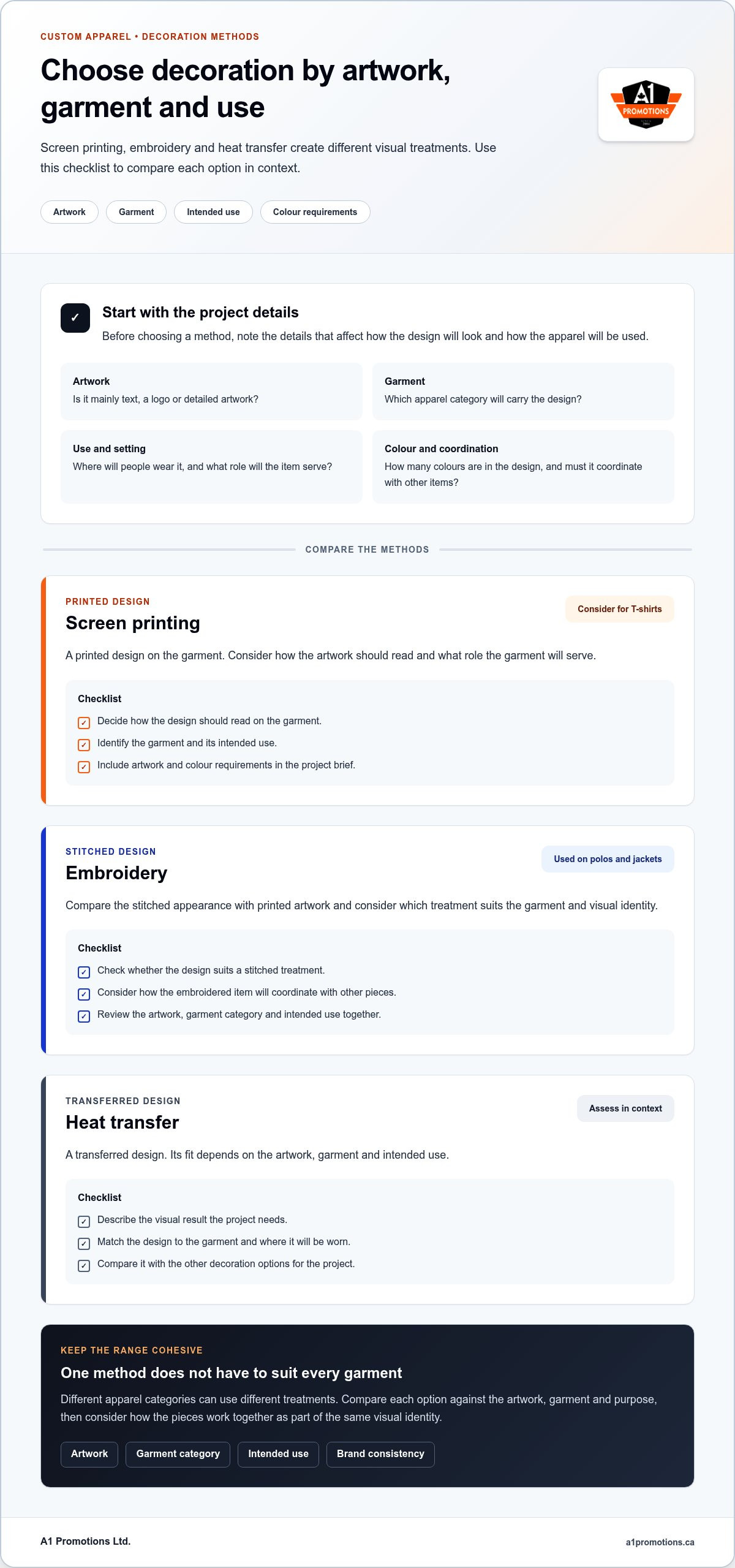
The decoration method affects how a logo or design looks on a garment. Screen printing, embroidery and heat transfer are common approaches, but none is right for every project. Compare the artwork, garment and intended use together. A design prepared for a printed T-shirt may need a different treatment on a polo or jacket.
Start with the visual result you want. Is the design mainly text, a logo or detailed artwork? Which garment will carry it, and where will people see it? Also consider how many colours the design uses and whether it needs to coordinate with other items in the order. These questions help narrow the options without assuming one method suits every garment.
When should you consider screen printing?
Screen printing is one of A1 Promotions Ltd.’s apparel decoration options, including for T-shirts. Consider how the design should read on the garment and the role the item will serve. An event T-shirt and a staff polo, for example, may need different visual treatments. Include the artwork, colour requirements and intended use in your project brief so the method can be considered in context.
When might embroidery suit branded apparel?
Embroidery is used on branded polos and jackets. Compare its stitched appearance with the look of printed artwork, then consider which treatment best suits the garment and the organization’s visual identity. Method decisions are easier to discuss when you provide the artwork, garment category and intended use together.
Heat transfer is another option to consider in relation to the design and garment. Use the table as a starting point, not a fixed rule. Each method creates a different visual treatment, so compare the options against your project’s priorities and the way the apparel will be used.
| Method | Visual character | Suitable considerations | Questions to resolve |
|---|---|---|---|
| Screen printing | Printed design on the garment | Artwork appearance and garment role | How should the design read? Which garment is being decorated? |
| Embroidery | Stitched design | Whether a stitched look fits the garment and brand | Does the design suit embroidery? How should it coordinate with other pieces? |
| Heat transfer | Transferred design | Artwork, garment and intended use | Which visual result is needed, and where will the garment be worn? |
There’s no universal best method. Provide clear artwork, identify the apparel categories and explain how people will use the garments. A1 Promotions Ltd. can bring its apparel decoration experience to those project details. Explore A1 Promotions Ltd.’s apparel options as you shape the brief.
How to compare custom apparel options without losing brand consistency
A coordinated apparel range doesn’t mean everyone has to wear the same item. It means each garment belongs to a clear visual system. Compare options using four criteria: audience, setting, design and coordination across garment types. Together, these criteria help you select clothing for different groups while keeping the organization recognizable.
Decision rule: prioritize the audience and intended use before choosing a garment. A team’s apparel may be intended to identify members at practices or events. Restaurant clothing serves staff in a customer-facing setting, while corporate clothing may suit another workplace role. The logo can connect all three, but the garment and its presentation should work for the people wearing it.
Match garment categories to the setting
Start by mapping each group to its context. T-shirts may suit a school activity or team event, while hoodies can serve another role in a club or organization’s apparel range. Corporate clothing represents a business in its work settings; restaurant apparel identifies staff in a service environment. Team or club apparel makes group affiliation visible. These are planning examples, not fixed rules. Choose categories based on who will wear them and where.
Write down the intended setting for each garment before comparing options. Is it for regular staff wear, a specific event or a team activity? This distinction keeps a familiar garment preference from driving the whole project. A T-shirt might suit one group, while another needs a different category. The goal is a deliberate range, not a one-item solution for every audience.
Keep the brand recognizable across different garments
Use the same core identity across the range: approved logo artwork, consistent colour choices and a clear design hierarchy. Decide which elements should stay fixed, such as the organization’s name or primary logo, and which can vary by group. A team identifier, for instance, can differ from a staff role while the main brand mark remains consistent.
Different garments don’t require a completely new visual identity. Set practical design rules before finalizing individual items. Keep logo versions organized, specify preferred colours and note which text or secondary marks belong to each group. Then review the range together. Each design should suit its garment and still feel connected to the organization’s other apparel.
For T-shirts, consider their purpose and how the design fits the broader range. Review the artwork alongside the other clothing categories rather than treating each item as a separate design project. Keep the approved logo, colours and group-specific details in view. This helps maintain a recognizable identity while allowing each garment to suit its audience and use.
Plan a custom apparel project with a clear, usable brief
A useful brief turns broad ideas into decisions that guide garment and decoration choices. Start with the people who will wear the apparel and its purpose, then record the categories, design direction and decoration preferences. Keep confirmed decisions separate from open questions. One shared reference makes it easier to coordinate clothing for different groups.
- Define the audience. Identify the wearer groups, such as staff, students, restaurant employees, team members or event participants.
- State the purpose. Note where and how each group will use the apparel, including whether it’s for everyday wear, an event or team use.
- List garment categories. Record the clothing types under consideration for each group, such as T-shirts, hoodies, corporate clothing or team apparel.
- Set the design direction. Gather existing logos and artwork, and note preferred colours, wording and brand guidance.
- Describe decoration needs. Record the desired visual effect and any method preferences, while noting unresolved details for discussion.
Set the project purpose and audience
Separate requirements by group rather than treating the order as one uniform decision. Everyday business clothing has a different role from apparel for a school event, sports team, restaurant or club. For each group, note who will wear the clothing, where it will be seen and what it should communicate. Then identify shared elements, such as the main logo, and details that need to distinguish roles or groups.
Bring the design and garment decisions together
Collect the files and brand direction you already have before choosing garments. Include logo versions, artwork, preferred colours and guidance on wording or placement. List garment categories alongside the groups they’re intended for, then describe the look you want from the decoration. Record preferences and questions clearly so the project can be discussed with the right context.
An actionable apparel brief names the audience, purpose, wearer groups, garment categories, artwork, brand direction, decoration preferences and unresolved decisions. Keep the information organized in one document. A simple table can pair each group with its purpose, clothing category and design notes. For example, distinguish a staff group from an event group even if both use the same logo. That helps coordinate the project without overlooking different needs.
Before sharing the brief, check that every item has a clear audience and purpose. Mark decisions as selected, preferred or still open. This prevents assumptions from being mistaken for requirements and gives decoration advice a useful starting point. With the project organized, discuss your apparel project with A1 Promotions.
How A1 Promotions supports custom apparel projects
A1 Promotions Ltd. is a family-owned business serving customers since 2004. Its apparel range includes T-shirts, hoodies, corporate clothing, restaurant apparel and sports team or club apparel. Expert decoration and customization services connect garment choices with the design and purpose of each project.
This range supports organisations planning clothing for more than one group. A business may need staff apparel, while a school or club may be coordinating clothing for participants. Garments and decoration can vary by audience while a shared logo or design direction keeps the organisation recognisable. Clear project details give friendly advice and dedicated support a practical starting point.
Apparel and decoration support under one roof
A1 Promotions Ltd. brings apparel together with expert decoration and customization. Screen printed T-shirts and embroidered polos and jackets show how different garments can carry an organisation’s branding. The right approach depends on the garment, design direction and intended use. Sharing those details helps connect decoration choices to the project rather than treating each item as a separate decision.
Take the next step with A1 Promotions Ltd.
Prepare a concise brief before discussing garment options. Include who will wear the clothing, why it’s needed, which categories you’re considering and what design elements should represent your organisation. If several groups are involved, note which details should stay consistent and where their apparel needs to differ.
Gather existing logo files, artwork and brand guidance, along with any questions about decoration. You don’t need to have every choice settled. Distinguishing preferences from open decisions helps A1 Promotions Ltd. provide friendly advice based on the project. Identify the intended audience and use for each garment, then describe the look you want the decoration to achieve.
A well-organised brief makes it easier to plan coordinated apparel for a business, school, restaurant, team or club. A1 Promotions Ltd. can help connect those needs with apparel and decoration options, supported by dedicated service and experience serving customers since 2004.
Quality branded merchandise that gets noticed. Explore custom apparel with A1 Promotions Ltd. and take the next step with your project brief.
Put your apparel plan into action
Use the brief as a working document, not a one-time checklist. Keep approved artwork, design direction and decisions together so future additions can follow the same visual rules. If the project serves several groups, record who will review each group’s needs and who gives final approval. Clear ownership can prevent conflicting edits and make later updates easier to manage.
Start with the most immediate need, then use what you learn to guide future custom apparel decisions. A coordinated approach can grow over time without requiring every group to wear the same garment. Keep the purpose in view, communicate design choices clearly and refine the plan as your organization’s needs change.
Ready to move from planning to selection? Explore custom apparel with A1 Promotions and take the next step with a clear direction for your project.
Frequently Asked Questions
How do I make a logo easy to recognize on custom apparel?
Give the main logo visual priority and keep secondary wording or graphics from competing with it. Review the artwork in the context of the garment and consider where people are likely to see it, such as during a staff interaction or at a school event. Use the same approved logo version across the project and focus the design on the most recognizable brand elements.
What colours should I consider for branded apparel?
Start with your organization’s established brand colours, then review how the artwork contrasts with each garment colour under consideration. A logo that reads clearly on one colour may be harder to distinguish on another. Avoid adding colours without a clear purpose. A focused palette helps connect apparel across groups and makes design reviews easier to manage.
Can one design work across T-shirts, hoodies and polos?
A shared design can carry across different garment categories, but review its composition for each one rather than assuming it will look identical. Check that important parts of the artwork remain clear and any supporting text still makes sense. If the layout needs adjustment, preserve the primary logo and brand colours so the garments still feel like part of the same set.
How can a team create apparel that feels unified without dressing every role identically?
Choose a common element, such as the organization’s main logo, then use role names or group identifiers to distinguish people where needed. Volunteers and team members, for example, can share the same brand mark while using different wording to identify their responsibilities. Decide which details are shared and which vary before preparing artwork, so the differences feel intentional.
What should I consider when choosing apparel for a restaurant team?
Consider who needs to be identified and how the apparel will represent the restaurant in customer-facing settings. If different staff groups need distinct clothing, list those roles and note which brand elements should appear across all of them. This gives the project a practical starting point for comparing garment categories and decoration options without assuming a particular style or garment specification.
Can custom apparel be coordinated with other branded materials?
Yes. A consistent logo, colour palette and design approach can connect clothing with items such as event displays or promotional products. Adapt the artwork to each item’s format while keeping the core brand elements recognizable. An event plan can align staff apparel with display materials without forcing every item to use an identical layout. The Promotional Products Canada guide offers broader brand-planning ideas.


